


adolescent writing
PhD
My PhD research programme is built around three studies that closely investigate topic sentences and their potential to support the writing process from planning through to polish. This study is supported by Professor Anne Castles ARC Laureate Fellowship.
Study 1: Scoping Review
Our research question was: For supporting adolescent writing, what are the agreed, essential features of a topic sentence, according to a range of sources on composition in English?
Study 2: Systematic review
This study aims to answer the following questions: 1. Does instruction on how to write topic sentences improve secondary students’ ability to write topic sentences? 2. Does instruction on how to write topic sentences improve the expository writing of secondary students?
Study 3: Corpus study (Fellowship)
This study will investigate a corpus of expository writing by NSW high school students for topic sentence use and assess its relationship to writing quality.
Blooming Essays! SLNSW Visiting Fellowship 2026
The project Blooming Essays explores historical non-fiction writing by teenagers from the SLNSW collections. I've discovered letters, essays and composition workbooks dating back to the 1800s.
Currently, I am examining the Personal Interest Projects (PIPs) of NSW HSC students from 2000-2024. I am coding discourse features within these PIPs, looking for associations between topic sentence use and quality.
I am also interested in the types of subjects students choose to write about, and so I am also looking at writing topics of students in the 19th and 20th centuries to see what sort of things were important to them. I’ve chosen 5 pieces of writing from 5 different time periods to explore. Watch this space for updates on both project components.
Book
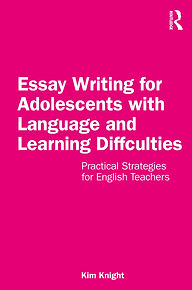
Essay Writing for Adolescents with Language and Learning Difficulties is a step-by-step guide for educators teaching secondary students with language difficulties how to write an English essay and, more importantly, how to do this on their own.
Essay writing is one of the most difficult skills that secondary school students need to develop, though there are limited resources available to support these students and their teachers. Based on research into language disorders in adolescence and language processing, the strategies in this book are easy to apply and represent a scaffolded and sequenced approach to teaching essay writing. The book's structure encourages students' skills and confidence to be developed gradually, each chapter building on the last, beginning with the early stages of text analysis and progressing through to writing a complete essay. While written with students with language difficulties in mind, the strategies in this book are applicable to teaching all secondary school students.